Mostrando entradas con la etiqueta space. Mostrar todas las entradas

sábado, 26 de septiembre de 2015

Super Moon Total Eclipse!!!


Este domingo 27, mañana mismo, habrá un eclipse de luna, pero no un eclipse de luna normal, ¡¡un eclipse total de superluna!!

Es como un ecplipse de luna normal, la tierra le hace sombra a la luna y ésta aparece de color rojo. ¿Y por qué es super? pues porque la luna a veces se encuentra más cerca de la tierra que otras y el domingo es uno de esos momentos en los que está más cerca y, por lo tanto, aparece un poco más grande, un 14% exactamente. Aquí podéis verlo perfectamente explicado.


El problema es que sucederá a las cuatro de la madrugada... cáspita.... de todas maneras no os preocupéis, habrá otro pronto, en 2033.

viernes, 20 de marzo de 2015

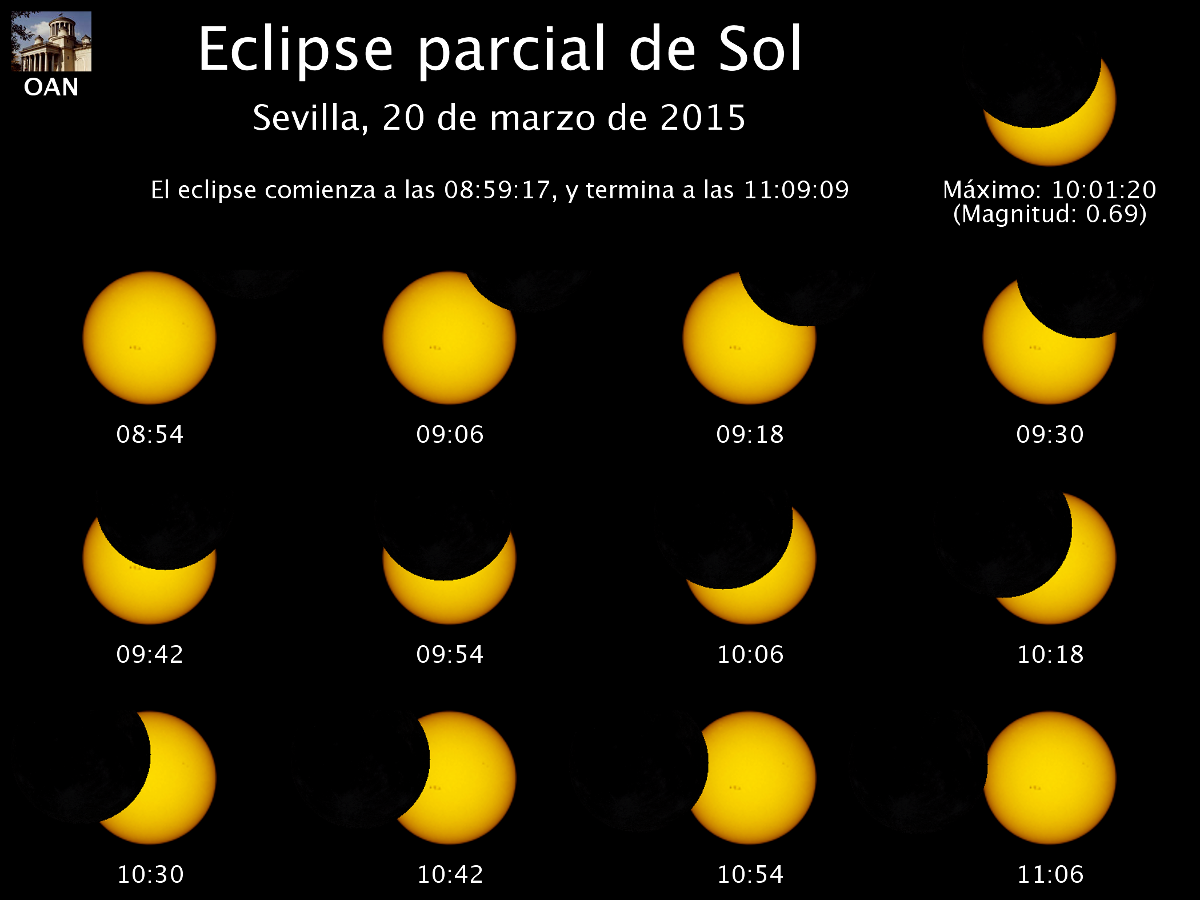
ECLIPSEEEEEE

Today we saw the eclipse! not in the sky because of the clouds...
But we have internet, slow internet... but still. We have had a great time and we have learned a lot.


martes, 17 de marzo de 2015

ECLIPSE!!

So.... It seems next friday will be rainy so we will not be able to see the eclipse. BUT there's always a way, you can watch the eclipse if you follow this link. Have fun and remember...
http://live.slooh.com/stadium/live/the-total-solar-eclipse-of-2015


Más información interesante aquí y aquí.
Otro sitio para ver el eclipse online, por si acaso.
 http://www.sky-live.tv/

lunes, 10 de marzo de 2014

A game about planets

This game has been created by Iván T. and Iván M. from sixth grade.
Congratulations Students!!!!!
Click on the link if you want to review this topic. Enjoy a lot!!!
PLANETS

Another game about planets. It has been created by Paula (6th grade , Bilingual group).   Fantastic student ! Click here

viernes, 13 de diciembre de 2013

Satelites

En segundo hemos hecho satélites para descubrir los misterios de la galaxia. Hemos planificado los satélites por parejas y han quedado geniales.


jueves, 12 de diciembre de 2013

A visit to a second grade class

URANUS

Uranus takes about 84 years to complete one orbit to the Sun.
It has got more or less 22 moons.
It is the coldest planet.
I has blue,green appearence.

MERCURY

 It is the closest planet to the Sun
The time for one rotation is 59 days.
The time for one orbit arround the Sun is 88 days.
This planet hasn't got any water.
It is rocky with an iron core.
The surface temperature is from  -170ºC to 430ºC.


SATURN

Time for one orbit to sorround the Sun is 29 years.
Time for one rotation is 11 hours.
Saturn has 30 moons.
Saturn rings are the most impressive rings in the Solar System.
Rings are made of ice and rocks.


 VENUS

It is an inner planet.
It is the second planet in the Solar System.
It orbits the Sun in 225 days .
It rotates in 243 days.
It haven't got moons.
It hasn't got water.
It is one of the hottest planets.
It is rocky with an iron core.
It has the name of the roman god of the love,Venus.

EARTH

The Earth is called the blue planet.
The time for one rotation is 24 hours.(a day)
The time for one orbit arround the Sun is 365 days(one year).
This planet has one moon,called the Moon.
The Earth has an Atmosphere (air) , Geosphere(land) and hydrosphere (water) and for this reason our planet , Earth supports life.


MARS

The time of one orbit around the Sun is 687 days.
The time for one rotation is 25 hours.
This planet has got two moons.
This planet is called a red planet.
This planet has got some parts of water.


JUPITER.

Time for one orbit arround the Sun is 12 years.
Jupiter has more or less 16 moons.
It is the largest planet.
It has three rings.
It is covered by colored bands of thick clouds.
It is gaseous.

NEPTUNE.

Neptune is an inner planet.
The time for one orbit for Neptune lasts 165 year.
On Neptune the time of one rotation lasts 16 hours.
Neptune has 8 moons.
It has four complete rings.
Neptune is gaseous.
It has a blue appearence.

martes, 26 de noviembre de 2013

Space in second grade

 Hemos hecho algunas cosillas sobre el espacio, los planetas y las constelaciones. Aquí dejamos algunas fotillos de los trabajos en clase. Enjoy!


martes, 19 de noviembre de 2013

We like the Moon!

¿Qué pasa si otro planeta choca contra la Tierra?
¿De dónde viene la Luna?
Todas esas respuestas y más en el siguiente video


Y aquí el primer paseo lunar


Y como a todo el mundo le gustan las canciones increíblemente tontas ahí va una de la Luna.


martes, 12 de noviembre de 2013

SPACE!!

Hemos empezado el tema del espacio (SPACE!!) y hemos visto este vídeo, aunque a nosotros/as nos ha gustado más con esta música. Y hemos usado un fantástico programa de la NASA para viajar por los planetas, merece la pena echar un vistazo.Y esta fotillo para que nos vayamos situando.
Have fun!